
When HBO’s The White Lotus chose Thailand as the setting for its third season, it had a major impact on the country’s tourism in general, and Koh Samui’s tourism in particular. Images from the island spread across social media and travel platforms worldwide, and many viewers began dreaming of experiencing the same tropical luxury lifestyle portrayed in the series.
According to IMDb, HBO’s The White Lotus Season 3 was the most popular TV series throughout 2025. When the show’s first season premiered in July 2021, few could have predicted the enormous impact it would eventually have on the global tourism industry.
The first season was set in Hawaii, the second in Sicily, and the third season, which premiered in February 2025, takes place in Thailand. Filming primarily took place on Koh Samui, but also in Bangkok, Phuket, and several other locations around the country.
The series, created by Mike White, continues its successful concept of wealthy tourists in leading roles — combined with a touch of dark social satire in a paradise setting. Just like in previous seasons, the destination itself is almost as important as the main characters.
The series revolves around a lifestyle best described as tropical decadence. Luxury living and attempts at spirituality are mixed with crime, sex, and conflict.
It is nothing new that films and TV series influence people’s travel habits. The Beach turned Maya Bay into a global phenomenon back in the early 2000s. Game of Thrones created massive interest in Dubrovnik, and after Emily in Paris, Americans’ interest in France increased significantly.
Video clip: The White Lotus Season 3 — The official trailer from HBO Max
Season 3 was filmed during 2024, and the production used several exclusive hotels to create the fictional resort “The White Lotus Thailand.” The main filming location was Four Seasons Resort Koh Samui, one of the island’s most exclusive resorts. The resort is located along a dramatic hillside on the island’s northwestern coast and is known for its private infinity pools overlooking the Gulf of Thailand. For many viewers, the hotel became almost as iconic as the series itself.
While the series aired, several hotels and local businesses on Koh Samui began noticing increased international interest, particularly from American and European travelers. The interest resulted in tens of thousands of Google searches worldwide.
Four Seasons was built along a steep hillside with private villas hidden among dense tropical vegetation. The resort was designed by renowned architect Bill Bensley, who is often recognized for his philosophy of sustainable design. Bensley himself has stated that the ambition was to preserve as much nature as possible during the construction process and that no coconut trees would need to be cut down during the project.
In addition to Four Seasons, the filming locations included:
• Anantara Bophut Koh Samui Resort (Koh Samui)
• Fisherman’s Village in Bophut (Koh Samui)
• Dusit Dheva Cultural Center (Koh Samui)
• Ang Thong National Marine Park (Surat Thani, near Koh Samui)
• Haad Rin Beach (Koh Phangan)
• Bangkok
• Phuket
Bookings to Thailand in general, and to Koh Samui in particular, surged after the premiere. According to Sunanta Kangvalkulkij, Director-General of Thailand’s Department of International Trade Promotion, the HBO series generated 36.5 million USD during 129 filming days.
Hundreds of Thai people were involved in the production team. Several local businesses and many residents also participated as extras or service staff during filming. Bookings to Thailand temporarily increased by around 300 percent, while online searches related to Thailand increased by 88 percent.
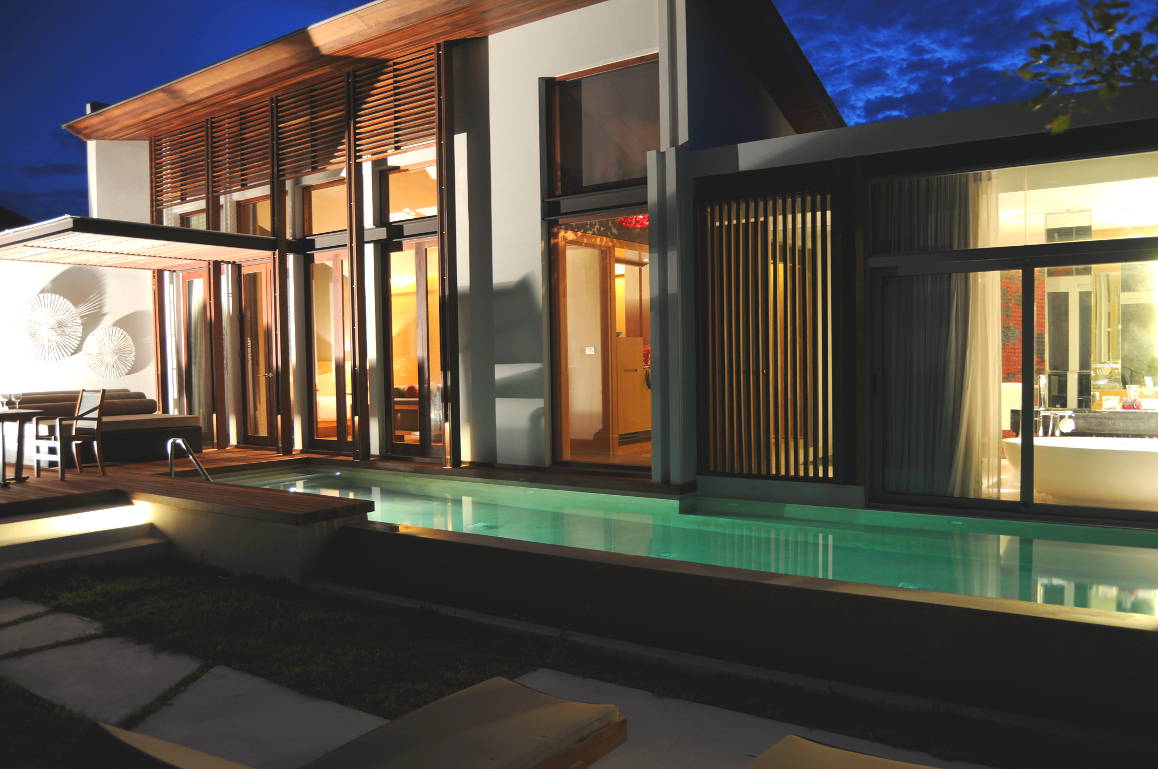
Image: An evening photo of a pool villa at a luxury resort on Koh Samui. Photographer: Jens
For HBO, choosing Koh Samui was no coincidence. Images of the island’s jungle-covered hillsides, turquoise waters, and exclusive resorts quickly spread across social media. On TikTok, travel influencers began posting guides to the “White Lotus hotels,” and several five-star hotels experienced a dramatic increase in demand.
The phenomenon has even been given a name within the travel industry: set-jetting — when people choose destinations based on films and TV series.
The island has long been marketed as an alternative to Phuket — less commercialized, more private, and more focused on boutique experiences and wellness. The island also offers the kind of visual contrasts showcased in the series: luxury lifestyles versus local everyday life, spirituality versus consumerism, wellness versus nightlife.
At the same time, the development raises questions about sustainability and overtourism. Thailand has previous experience with what global exposure can do to sensitive tourist destinations. Maya Bay, which became world-famous through the film The Beach starring Leonardo DiCaprio, was closed for several years because the coral reefs and surrounding environment suffered severe damage from mass tourism.
And even though The White Lotus primarily appeals to a wealthy audience, similar concerns exist regarding Koh Samui and other parts of southern Thailand.
The island has long struggled with issues such as:
• Water supply
• Waste management
• Overloaded infrastructure
• Environmental impact from large resort developments
Local media outlets and international newspapers have discussed whether the “White Lotus effect” risks further intensifying these problems.
At the same time, many within the tourism industry argue that this new type of tourism may actually be more economically sustainable. Wealthier tourists spend significantly more money per person than backpackers and many long-term travelers, which can generate higher revenues without visitor numbers becoming excessively high. The question is whether that balance can be maintained in the long term.
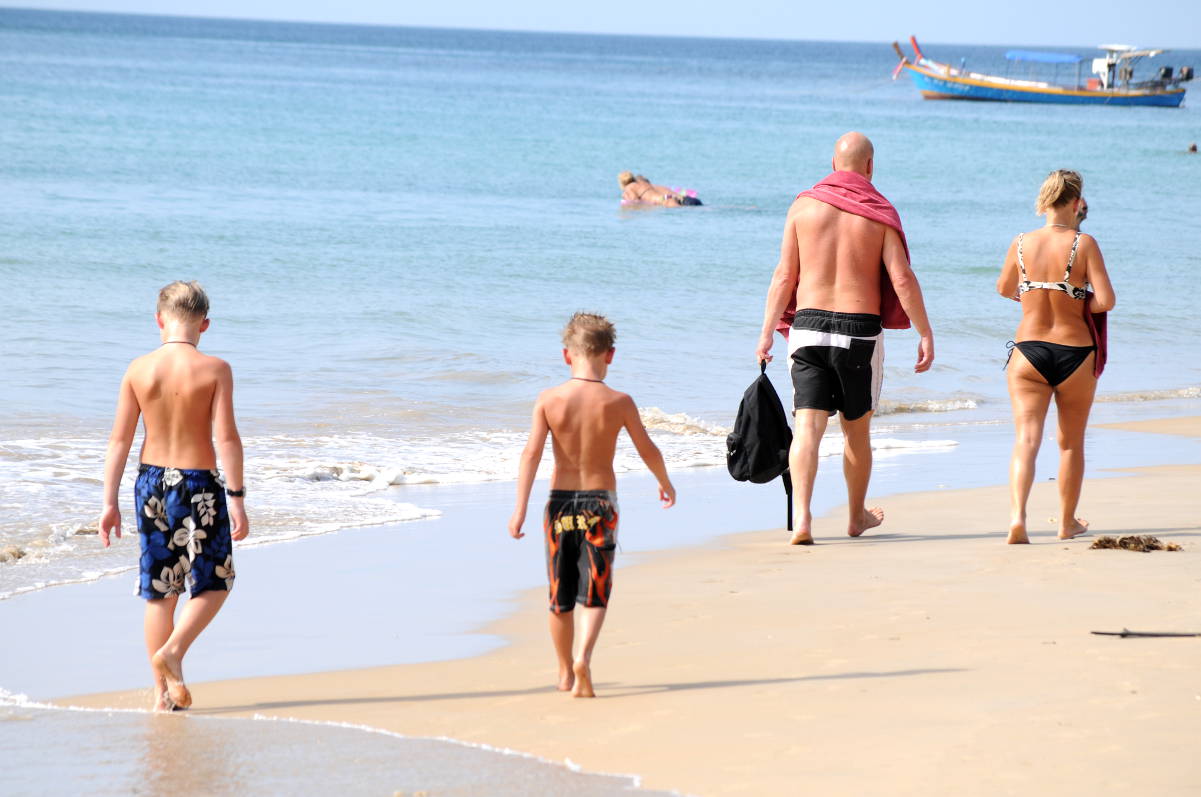
Image: A walk on the beach in the sunshine on Koh Samui. Photographer: Jens
It is also clear that Thailand sees the film industry as a strategic tool for tourism. In recent years, the country has offered generous financial incentives for international film productions, including tax rebates and cashback programs of up to 30 percent.
The goal is to compete with other major filming destinations such as Australia, New Zealand, and South Africa. For Thailand, it is not only about tourism, but also about international brand-building.
When millions of people around the world see dreamlike images from Koh Samui, the HBO series effectively becomes a global marketing campaign worth far more than traditional advertising.
What makes The White Lotus particularly interesting is that the series is essentially a satire about privileged people and consumerism. Despite this, it simultaneously manages to romanticize the very lifestyle it criticizes.
Many viewers do not seem to leave the series with the feeling that luxury tourism is problematic, but rather with a desire to check into the very same resort themselves.
For Thailand, this brings both enormous opportunities and new challenges. Tourism is already one of the country’s most important industries, and after the pandemic, Thailand has actively worked to attract international visitors once again.
Koh Samui could very well become the next major global luxury destination, much like Bali, Santorini, or the Maldives. But one question remains: Can Thailand continue benefiting from the global attention without losing what made the destination attractive in the first place?