
Koh Phangan is an island internationally renowned for its beautiful beaches, Full Moon parties, picturesque beach bars, and digital nomads. In recent times, however, the island has also attracted significant media attention for entirely different reasons. Police and immigration authorities have intensified their monitoring of foreign long-term residents and business operators. Particular focus has been placed on corporate fraud and drug-related crime. In this article, I outline several of the raids and operations carried out by police and immigration authorities since the beginning of the year, followed by a personal analysis.
The following examples represent only a selection of the raids and operations carried out on the island during the year:
January 12 – Three Israelis – a 33-year-old man and two women aged 23 and 24 – were arrested during a raid on a hotel room following complaints about a loud gathering. Police seized cocaine, ketamine, and ecstasy powder. A fourth individual, a 48-year-old Israeli national, was later arrested. The younger Israelis stated that they had purchased the drugs from him through a mobile application. In total, authorities confiscated 33 grams of cocaine, 16 grams of ketamine, ecstasy pills, and 79,000 baht in cash.
January 22 – Police coordinated raids across 25 locations and filed charges against 35 individuals. Approximately 170 officers took part in the operation, including local police, immigration police, and tourist police. Search warrants were executed at 22 restaurants, a clothing and souvenir shop, and two hotels. Among those charged were 12 Myanmar nationals.
February 14 – Narcotics and tourist police arrested an Israeli grocery store owner and seized drugs with an estimated street value of around 50 million baht. The confiscated substances included heroin, cocaine, ecstasy, and hallucinogenic mushrooms. Police suspected that the grocery store was being used as a front for drug distribution, primarily targeting foreign tourists. According to investigators, the suspect never met customers in person, but instead placed the drugs inside a sock hidden near a waste disposal site. Buyers would then leave cash payments in the same sock at the agreed location.
March 5 – Police arrested a Brazilian man suspected of selling cocaine, ecstasy, and ketamine to tourists through the messaging application WhatsApp. In addition to the drugs, authorities also seized 106,200 baht in cash.
April 1 – The visas of three individuals of Israeli and American background were revoked. According to authorities, the measure was taken due to inappropriate behavior and potential disturbances to public order. The incidents reportedly included waving a flag containing religious symbolism and using WhatsApp to encourage people to gather for various activities.
May 2 – Authorities carried out a major raid on a child center that also operated as a school. The operation was conducted jointly by police, military personnel, and immigration authorities. The arrested owners were an Iranian couple in their mid-40s, and during the raid authorities discovered 89 Israeli children on the premises. The children were between two and twelve years old. Shortly afterward, Thai authorities ordered expanded inspections of foreign labor nationwide.
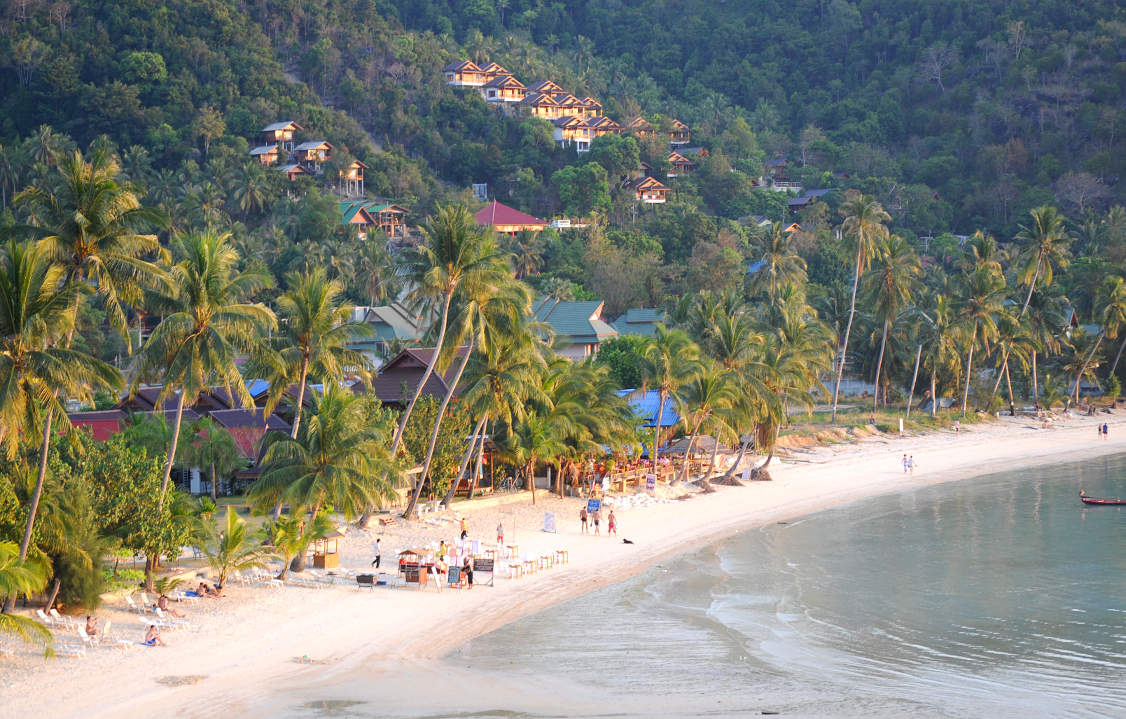
Image: A restaurant on Koh Phangan has set the tables in the evening sun. Photographer: Jens
Several factors appear to be contributing to the current situation:
1. A Significant Increase in Foreign Residents
In recent years, Koh Phangan has attracted large numbers of long-term visitors, particularly from Israel and Russia.
2. The Use of “Nominees”
Thai authorities have placed particular focus on businesses that use Thai citizens as formal, but not actual, owners. Raids targeting such businesses are intended to strengthen oversight of a labor market often affected by corruption.
3. International Criminal Networks
The drug trade is organized both locally on the island and across national borders. Much of the narcotics distribution is directed toward tourists staying on Koh Phangan.
The developments on Koh Phangan are part of a broader strategic shift. Authorities are moving away from isolated interventions toward mapping entire environments – businesses, property owners, and social networks. In short, operations and activities run or managed by non-Thai nationals are facing increasingly close scrutiny.
Koh Phangan is currently undergoing a transformation. Once regarded as a relatively unregulated tourist destination, the island has become a test case for how Thailand manages globalization, migration, and criminal activity.
Law-abiding entrepreneurs on Koh Phangan, as well as in other parts of Thailand, likely have little to fear. The key is simply to understand and comply with the basic laws and regulations that apply to us “farangs.”
I will return to this subject on weegar.com. Until next time!
Sources:
• Bangkok Post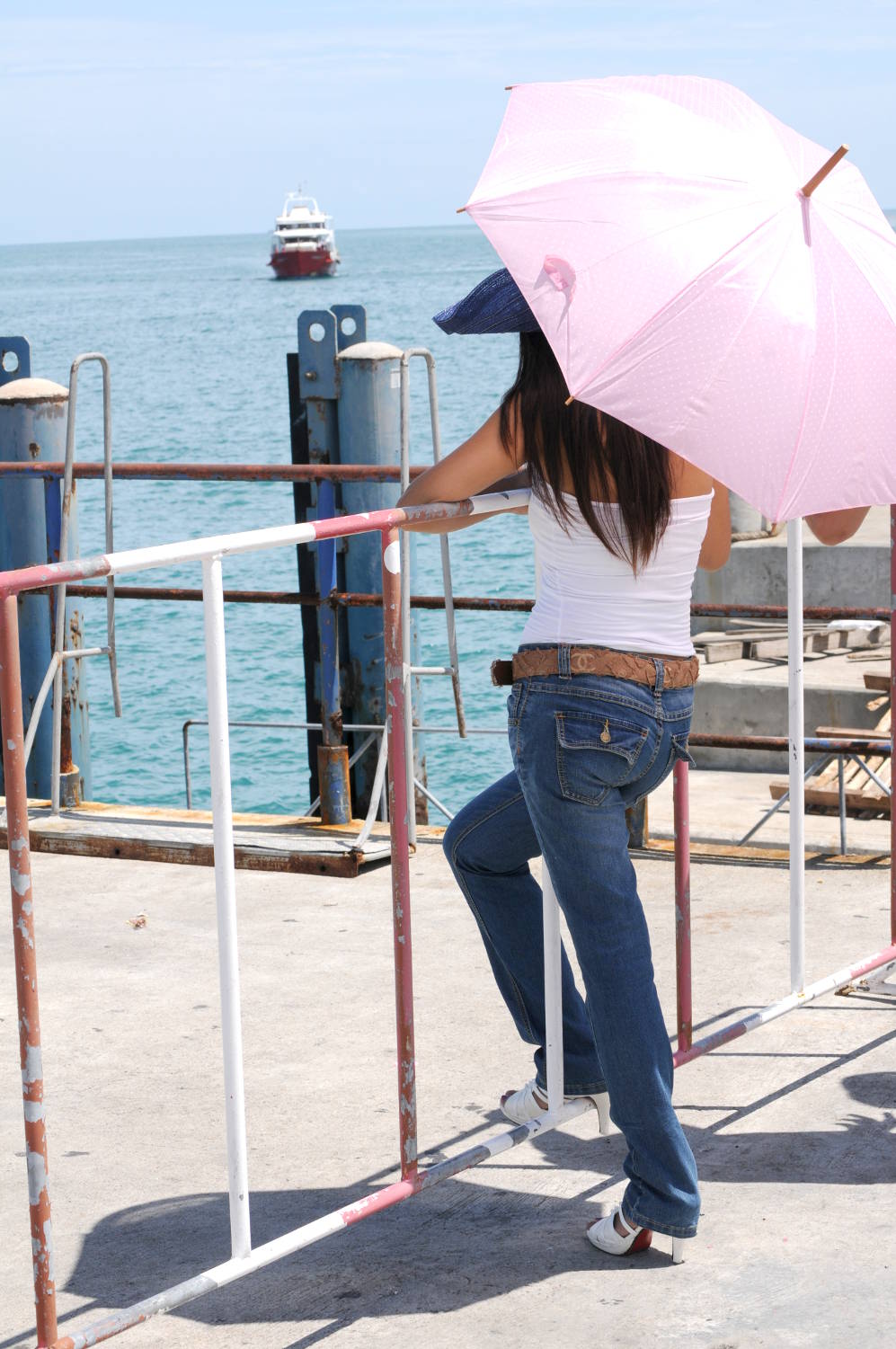
Image: A young woman with a parasol on the pier in Thongsala on Koh Phangan. Photographer: Jens